Stepping into the world of digital reading can be a transformative experience, and for over a decade, Amazon’s Kindle Ereaders have led the charge, revolutionizing how we consume books. Among its storied lineage, one model frequently referred to as the “Kindle 6” holds a special place: the Amazon Kindle (7th Generation), released in 2014. This device marked a pivotal moment in the evolution of Amazon’s entry-level e-readers, bringing essential features to a wider audience. If you’re curious about this classic model, its unique characteristics, or how it stands up years later, you’ve come to the right place. Let’s explore the world of this particular Kindle Ereader and its lasting legacy.
The Amazon Kindle (7th Generation): A Historical Perspective
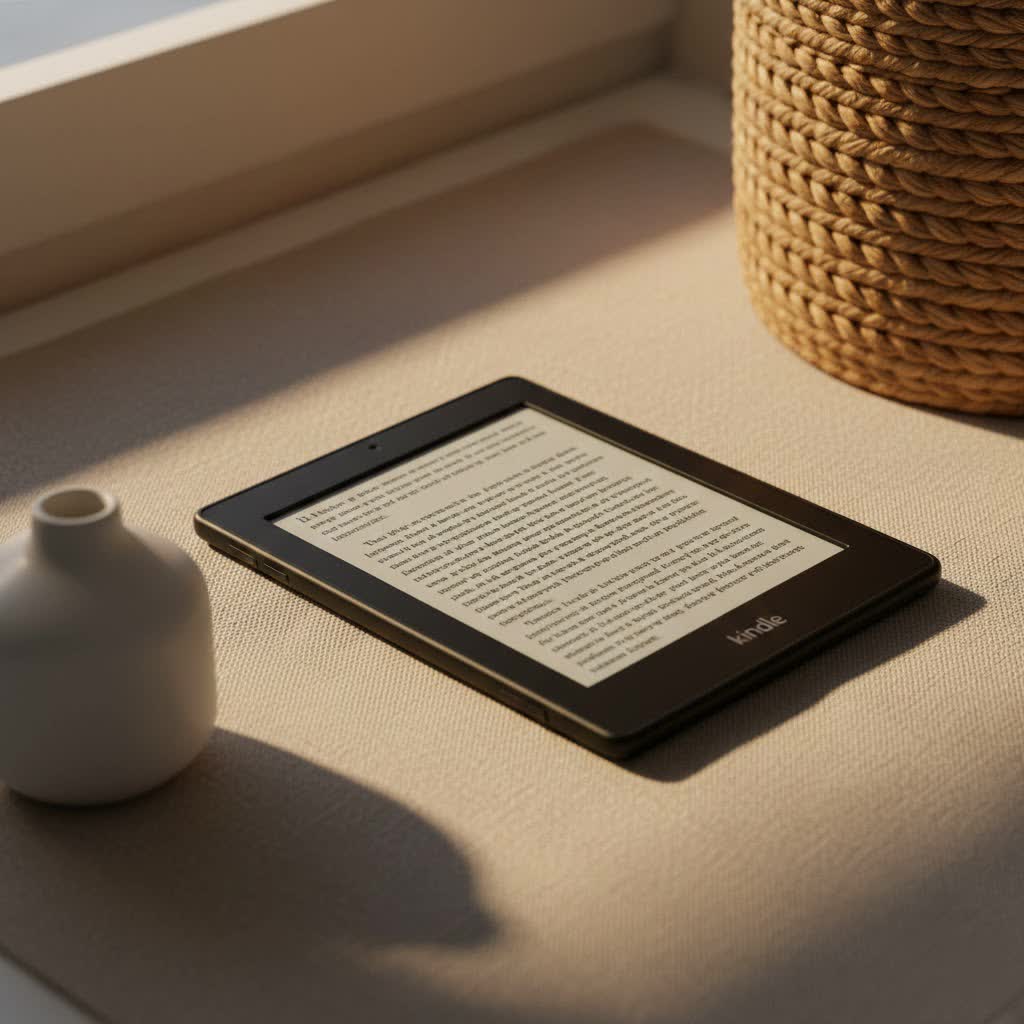
The journey of the Kindle Ereader began in 2007, and each subsequent model has brought innovations that shaped the digital reading landscape. The Amazon Kindle (7th Generation), affectionately dubbed the “Kindle 6” by many users, made its debut in October 2014. This release was significant as it introduced a touchscreen interface to Amazon’s most affordable e-reader, a feature previously reserved for more premium models like the Kindle Paperwhite.
Before this iteration, basic Kindles relied on physical buttons or a D-pad for navigation. The 7th Generation Kindle embraced the touch-first paradigm, making the device feel more intuitive and modern, especially for users accustomed to smartphones and tablets. Beyond the touchscreen, this model also doubled the internal storage from 2GB to 4GB, providing ample space for thousands of books. It also boasted a 20% faster processor compared to its non-touch predecessor, enhancing overall responsiveness and page-turn speed, a crucial improvement for avid readers. This commitment to enhancing the user experience, even in its most basic offering, underscored Amazon’s dedication to the e-reader market.
Unpacking the Technology of the Kindle (7th Generation)
While perhaps not boasting the cutting-edge features of today’s e-readers, the Amazon Kindle (7th Generation) incorporated technology that was highly functional and purpose-built for reading in its era. Understanding these core components reveals why it remained a popular choice.
E-Ink Pearl Display: Clarity for Focused Reading
|
Our Picks for the Best Kindle Ereader in 2026
As an Amazon Associate I earn from qualifying purchases.
|
||
| Num | Product | Action |
|---|---|---|
| 1 | Amazon Kindle Paperwhite Signature Edition 32GB (newest model) – 20% faster with auto-adjusting front light, wireless charging, and weeks of battery life – Metallic Jade |

|
| 2 | Amazon Kindle Colorsoft 16 GB (newest model) – With paper-like color display that brings stories to life – No Ads – Black |
|
| 3 | Amazon Kindle 16 GB (newest model) - Lightest and most compact Kindle, now with faster page turns, and higher contrast ratio, for an enhanced reading experience - Matcha + 3 Months of Kindle Unlimited (with auto-renewal) |
|
| 4 | Amazon Kindle Paperwhite 16GB (newest model) – 20% faster, with new 7" glare-free display and weeks of battery life – Black + 3 Months of Kindle Unlimited (with auto-renewal) |
|
| 5 | Amazon Kindle 16 GB (newest model) - Lightest and most compact Kindle, now with faster page turns, and higher contrast ratio, for an enhanced reading experience - Matcha |
|
| 6 | Amazon Kindle 16 GB (newest model) - Lightest and most compact Kindle, now with faster page turns, and higher contrast ratio, for an enhanced reading experience - Black + 3 Months of Kindle Unlimited (with auto-renewal) |
|
| 7 | Amazon Kindle Paperwhite 16GB (newest model) – 20% faster, with new 7" glare-free display and weeks of battery life – Jade + 3 Months of Kindle Unlimited (with auto-renewal) |
|
| 8 | Amazon Kindle Paperwhite 16GB (newest model) – 20% faster, with new 7" glare-free display and weeks of battery life – Black |
|
| 9 | Amazon Kindle 16 GB (newest model) - Lightest and most compact Kindle, now with faster page turns, and higher contrast ratio, for an enhanced reading experience - Black |
|
| 10 | Amazon Kindle Paperwhite 16GB (newest model) – 20% faster, with new 7" glare-free display and weeks of battery life – Raspberry + 3 Months of Kindle Unlimited (with auto-renewal) |
|
At the heart of the Kindle (7th Generation) was its 6-inch E-Ink Pearl display. This screen technology was designed to mimic the appearance of real paper, providing a comfortable reading experience that significantly reduced eye strain compared to traditional backlit LCD screens. With a resolution of 800×600 pixels and a pixel density of 167 ppi (pixels per inch), text appeared crisp and clear, closely resembling printed ink on a page. The screen supported 16 levels of greyscale, allowing for nuanced display of images and book covers, though color was absent, maintaining the device’s focus solely on text.
Infrared Touchscreen: Responsive Interaction
The introduction of an infrared (IR) touchscreen was a game-changer for the basic Kindle line. Unlike capacitive touchscreens found in most modern devices, IR touchscreens use a grid of infrared light beams across the display. When a finger or stylus breaks these beams, the device registers the touch. This technology allowed for precise navigation, effortless page turns with a simple tap or swipe, and easier interaction with on-screen menus, the experimental web browser, and the integrated dictionary. It offered a responsive and intuitive interface that greatly enhanced usability.
The Absence of a Frontlight: A Key Differentiator
One of the most notable characteristics, and a primary distinction from its more expensive Paperwhite counterparts, was the absence of a built-in frontlight. The Kindle (7th Generation) reflected ambient light, just like a physical book. This meant that while it offered an excellent reading experience in well-lit environments, an external light source was necessary for reading in dimly lit rooms or in the dark. For many purist readers, this wasn’t a drawback but rather a reinforcement of the device’s paper-like philosophy, promoting distraction-free reading.
Performance and Storage: Built for Your Library
Under the hood, the Kindle (7th Generation) was powered by a 1 GHz Freescale processor, a significant upgrade that contributed to its snappier performance. It came equipped with 4GB of internal storage, of which approximately 3GB was usable for content. This capacity was ample for storing thousands of e-books, given that the average e-book file size is relatively small. For readers with extensive libraries, Amazon’s free cloud storage for all Kindle purchases ensured that their entire collection was always accessible and never truly “full.”
Comparing the Kindle (7th Generation) to its Peers
To truly appreciate the Amazon Kindle (7th Generation), it’s helpful to compare it with other e-readers available during its prime and consider its positioning within Amazon’s own ecosystem. This model occupied the entry-level segment, offering core Kindle functionality at an accessible price point.
When compared to its direct predecessors, such as the 5th Generation Kindle (which was non-touch), the 7th Generation was a clear step forward. The intuitive touchscreen simplified navigation and eliminated the need for physical page-turn buttons, streamlining the user experience. The increased storage and faster processor further solidified its status as a significant upgrade.
However, the main distinction within Amazon’s lineup was its contrast with the Kindle Paperwhite series. At the time of its release, the Kindle Paperwhite (2nd or 3rd Generation) offered a higher resolution screen (212 ppi or 300 ppi, respectively) and, crucially, an integrated, adjustable frontlight. This feature allowed for comfortable reading in all lighting conditions, making the Paperwhite a popular choice for those who read extensively at night or in varied environments. The 7th Generation Kindle was for readers who prioritized affordability and a classic, glare-free E-Ink experience, and were content with external lighting for darker settings. It lacked the water resistance found in later Paperwhite models, making it less suitable for poolside or bath-time reading.
Key Specifications: Kindle (7th Generation) Overview Table
To provide a clear overview, here’s how the Amazon Kindle (7th Generation) stacks up against a contemporary premium option like the Kindle Paperwhite (3rd Generation), also released in 2015.
| Feature | Kindle (7th Gen / “Kindle 6”) | Kindle Paperwhite (3rd Gen) |
|---|---|---|
| Screen Size | 6 inch | 6 inch |
| Resolution | 800×600 (167 ppi) | 1024×758 (300 ppi) |
| Display Type | E-Ink Pearl | E-Ink Carta |
| Frontlight | No | Yes |
| Water Resistant | No | No |
| Storage | 4GB | 4GB |
| Touchscreen | Yes (Infrared) | Yes (Capacitive) |
| Original Price | $79 (with ads) | $119 (with ads) |
Is the Amazon Kindle (7th Generation) Still a Good Buy Today?
Years after its initial release, the question arises: does the Amazon Kindle (7th Generation) still hold value? While it has been superseded by numerous newer models with advanced features, this “Kindle 6” can still be a worthwhile acquisition for specific individuals or situations.
For budget-conscious readers, a used Kindle (7th Generation) offers an extremely affordable entry point into the Kindle ecosystem. It provides the core, distraction-free E-Ink reading experience that Amazon is known for, without the bells and whistles that drive up the price. It’s an excellent choice for a secondary e-reader, perhaps for travel or as a dedicated device for a child, offering durability and simplicity. Collectors of e-readers might also appreciate its place in Kindle history as the first basic model with a touchscreen.
If you are considering purchasing a used Kindle (7th Generation), look for devices with good battery health and a screen free from scratches or dead pixels. Since it lacks water resistance, inspect for any signs of liquid damage. Ensure the Wi-Fi connectivity functions correctly for downloading books. Its simple, robust design means many units have stood the test of time, offering a reliable reading companion even today.
Maximizing Your Kindle (7th Generation) Experience
Even without a frontlight or the latest features, the Amazon Kindle (7th Generation) offers a fantastic reading experience, and with a few tips, you can make the most of it.
Start by ensuring your device’s software is up to date. Amazon periodically releases updates that can improve performance, add new features, and enhance stability. Connecting to Wi-Fi and checking for updates in the settings menu is usually a straightforward process. Proper battery care, such as avoiding extreme temperatures and not letting the battery fully discharge regularly, will help prolong its life. Using a protective case is also highly recommended to shield the E-Ink screen from accidental damage. Despite its age, this Kindle can still seamlessly access Amazon’s vast Kindle Store, download books from your library, and utilize features like Goodreads integration, Vocabulary Builder, and X-Ray, enriching your reading journey.
Common Issues and Simple Fixes
Like any electronic device, the Amazon Kindle (7th Generation) may encounter minor issues over time. Fortunately, many common problems have straightforward solutions. If your Kindle freezes or becomes unresponsive, a soft reset (holding the power button for 20-40 seconds until it restarts) often resolves the issue. Screen ghosting, where faint remnants of previous pages appear, is a normal characteristic of E-Ink displays and is usually cleared with a full page refresh, which happens automatically every few page turns or can be manually triggered in settings. If battery life seems shorter than expected, try turning off Wi-Fi when not downloading books, as constant connectivity can drain power. For Wi-Fi connection problems, ensure your router is working correctly, try restarting both devices, or re-enter your Wi-Fi password.
The Enduring Legacy of the Kindle (7th Generation)
The Amazon Kindle (7th Generation), often recognized as the “Kindle 6,” holds a significant place in the history of e-readers. It democratized the touchscreen experience, making digital reading more accessible and intuitive for a broader audience. By offering a solid, feature-rich device at an entry-level price, it helped solidify Kindle’s dominance in the market. While newer models boast higher resolutions, integrated lighting, and water resistance, this 2014 classic proved that a dedicated e-reader doesn’t need all the frills to provide an exceptional reading experience. Its legacy is one of simplicity, affordability, and a pure focus on the joy of reading, reflecting Amazon’s vision for making books available to everyone, everywhere.
Conclusion: Rediscovering the “Kindle 6” Ereader
The Amazon Kindle (7th Generation), widely known as the “Kindle 6,” stands as a testament to thoughtful design and focused functionality in the world of e-readers. Its introduction of a touchscreen to the basic Kindle lineup, coupled with its reliable E-Ink Pearl display and robust performance, created a highly popular device for its time. Even today, it offers a compelling, distraction-free digital reading experience for those who appreciate simplicity and the natural feel of ink on paper, provided you have adequate lighting. Whether you’re a seasoned e-reader enthusiast or new to the world of Kindles, this model reminds us of the core purpose of these devices: to immerse us effortlessly in stories. What stories will you discover on your Kindle Ereader?
Frequently Asked Questions
What is the “Kindle 6”?
The term “Kindle 6” most commonly refers to the Amazon Kindle (7th Generation), an entry-level e-reader released in October 2014. It was significant for being the first basic Kindle model to feature a touchscreen display.
Does the Kindle (7th Generation) have a backlight?
No, the Amazon Kindle (7th Generation) does not have a built-in frontlight or backlight. It relies on ambient light for reading, similar to a physical book. For reading in the dark, an external light source is required.
Can I still buy a Kindle (7th Generation) new?
No, the Amazon Kindle (7th Generation) is a discontinued model. It is no longer sold new directly by Amazon. However, you can often find used or refurbished units available through online marketplaces and third-party sellers.
